Most companies are still figuring out what their AI stack will look like. That makes it tempting to wait before investing in the content behind it.
The problem is that AI is already using enterprise content, and it is exposing issues that were easier to ignore when people had to search for information themselves.
Duplicate documents. Weak metadata. Outdated versions. Important knowledge buried in PDFs and presentations. Content spread across systems that were never designed to work together.
None of this is new. What's new is how quickly AI can find it, combine it, and turn it into an answer.
Content intelligence should not be the cleanup phase of an AI project. It needs to be part of the foundation.
AI changes the cost of messy content
A person searching for information can usually spot when something looks old or irrelevant. They can compare several sources, ask a colleague, or decide they don't trust what they found.
An AI system doesn't have that same judgment. It retrieves what is available and produces an answer from it.
If the system finds three versions of a policy, it may not know which one's current. If two teams created slightly different explanations of the same product feature, it may blend them together. If important content has poor metadata, the system may miss it entirely.
AI does not fix content problems. It exposes them, faster than the old way of working ever did and at a scale that is much harder to contain.
And the volume is growing. AI makes it easier for every team to create more documentation, training, support content, and internal guidance. Without a way to understand and govern that content, organizations are simply adding material to libraries they already struggle to manage.
Faster production doesn't automatically create better knowledge. It can just create more content to sort through later.
You cannot govern what you cannot see
Most enterprise content is organized by where it lives.
A document sits in a folder. A course lives in a learning platform. Product documentation is stored in an authoring system. Policies are saved as Word files or PDFs. Each system may make sense on its own, but nobody has a clear view across all of it.
That makes basic questions surprisingly hard to answer:
- Where are we covering the same subject more than once?
- Where are the gaps?
- How much content do we have on a particular product, process, or customer issue?
- Which information is authoritative?
- What should an AI system retrieve when someone asks a question?
A content inventory can help, but a spreadsheet only tells you what someone recorded about a file. It doesn't tell you what the content actually means or how it relates to everything else.
That's where semantic analysis changes the work.
SyndicateAI Content Maps analyze content based on meaning, not just filenames, folders, or manually applied tags. Related documents form clusters that teams can explore visually. Dense groupings may reveal duplicate or overlapping material. Sparse areas may point to missing information. Unexpected relationships can show where content has drifted across teams or systems.
Better metadata still needs human judgment
Metadata has always mattered. AI makes the consequences of weak metadata harder to avoid.
Good classification helps people find content. It also gives retrieval systems more context about what a document covers, which audience it serves, and when it should appear.
The problem is that manual classification rarely keeps pace with content growth. Taxonomies become long and inconsistent. People choose the first tag that looks close enough. Some content never gets classified.
SyndicateAI Auto Classification reduces that manual work by analyzing a document and recommending relevant terms from the organization's taxonomy. It considers the content's meaning and context, along with existing classifications and human-applied examples.
The recommendations aren't applied blindly. A person reviews, accepts, rejects, or edits them. That matters. Classification affects what people and AI systems can find. It shouldn't become another automated process nobody checks.
Auto Classification helps teams apply metadata more consistently without removing the people who understand the content and remain accountable for it.
Content intelligence improves what AI retrieves
Retrieval-Augmented Generation (RAG) retrieves relevant information from an approved content source before an AI system generates an answer. Content Maps and Auto Classification aren't RAG tools. They improve the content foundation that retrieval depends on.
Organizations often treat RAG as the entire solution. Connect an AI assistant to company content, and the answers will become reliable.
But retrieval cannot fix conflicting source material. It cannot decide which duplicate was meant to be authoritative. It cannot retrieve important content that is poorly described or missing from the accessible source. It can't create governance that doesn't exist.
RAG works better when the content is understood, organized, and maintained before retrieval begins.
With SyndicateAI, organizations can analyze content from sources and formats including MadCap Flare, DITA, PDF, PowerPoint, Word, and Markdown. That means content teams can start working with existing knowledge instead of recreating everything in a new format.
They can see relationships across that content, improve classification, reduce unnecessary duplication, and make stronger decisions about what AI systems should use.
SyndicateAI supports RAG by giving customer AI implementations access to governed, semantically indexed content. One managed content source can support multiple AI assistants and applications without creating a separate copy for each one.
Role-based access controls still apply, helping keep restricted content out of responses to people who aren't authorized to see it.
One content source needs to support more than one AI tool
Most organizations won't end up with only one AI experience. They may use one tool internally, an AI search tool on a customer portal, or a support assistant for workforce training.
Copying content into each system creates another version to maintain. Building a separate integration for every tool creates more technical work and more places for governance to break down.
Model Context Protocol (MCP) offers a more standardized way for AI applications and agents to interact with enterprise platforms.
SyndicateAI MCP support gives AI systems access to its AI Search and RAG tools through a common connection. The AI system can discover available capabilities and decide when to use them, rather than requiring separate configuration for every endpoint and instruction.
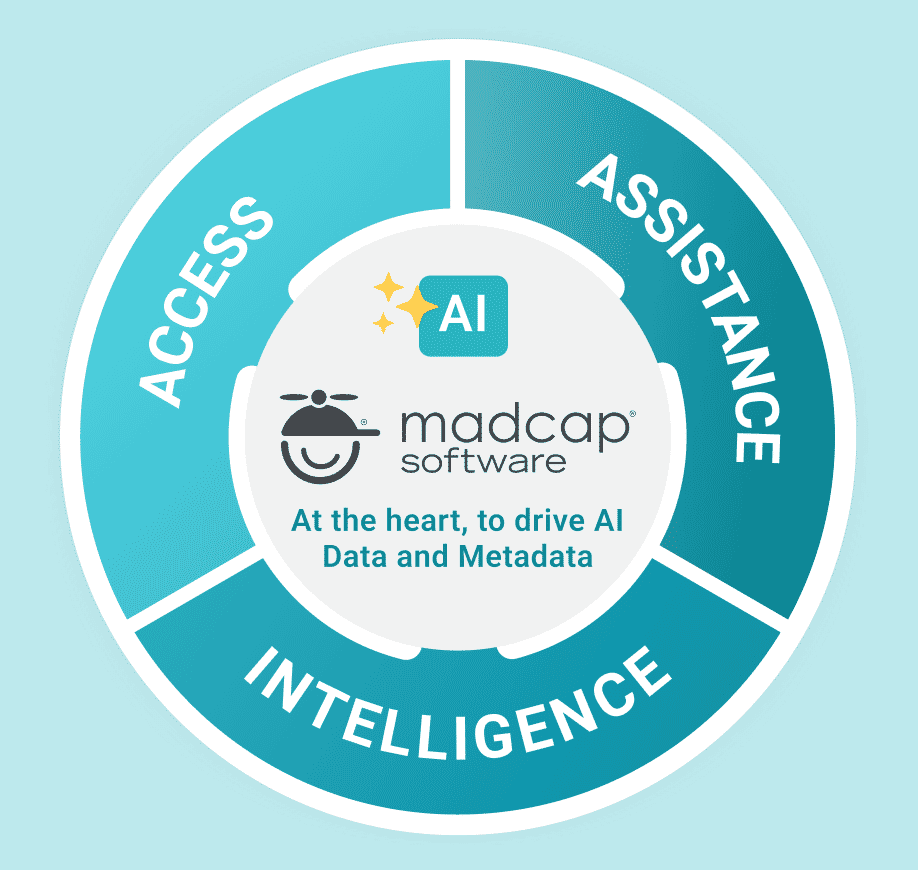
It makes governed content easier to connect to AI systems without treating every new assistant as a separate integration project. Content Maps and Auto Classification improve the content itself. RAG makes approved content available for grounded responses. MCP gives AI systems a more consistent way to access it.
Different functions, one foundation.
The AI market will keep changing
Models will improve. Vendors will come and go. New assistants and agents will be added.
That is exactly why the content foundation should come first.
A content intelligence foundation isn't tied to one model or one assistant. It gives the organization a clearer view of what it knows, where that knowledge lives, how it relates, and what content to trust.
Without that foundation, every AI project starts with the same unresolved questions. What content should we use? Which version is correct? What is missing? Who can access it? How do we connect it without creating another copy?
Those questions become more expensive after AI systems are already in production.
Now is the time to answer them.
See what your content looks like to AI.