What the shift in L&D work actually requires, and what it says about the organizations getting it right
I’ve been in enough L&D conversations over the past eighteen months to recognize a pattern when I see one. A shift is underway in what this work requires, and most of the discussion around it is still happening privately, between practitioners who aren’t sure whether what they’re experiencing is specific to them or something bigger. It’s something bigger.
The anxiety is still there: the question of whether AI is going to hollow out the L&D function comes up in almost every conversation. But underneath it there's a second question that's harder to articulate and, I think, more important: what does the work actually look like now? Not philosophically. Day to day. What are the decisions that matter, the skills that earn respect, the outputs that justify a team?
My honest answer is that the work is becoming more demanding, not less. It's also becoming more valuable, though that value isn't always recognized yet, and in some organizations it may not be until something goes wrong.
Here's what I mean.
The organizations that right-sized wisely
Most organizations have spent the past two years cutting. Some have done it thoughtfully; a lot haven't. Either way, the people who came through it are, on the whole, the people who were harder to replace. That's true in engineering, in finance, in legal. It's true in L&D too.
What's changed is the expectation those people are working under. Leaner organizations run on less slack. There's less tolerance for work that doesn't connect to something the business actually needs, and less patience for functions that can't articulate their own contribution. The L&D teams I see struggling aren't struggling because they lack capability. They're struggling because they're still measuring themselves by outputs (courses built, hours delivered, completion rates…) in organizations that have moved on to asking different questions.
The talent dimension compounds this. The professionals who survived the cuts know their value, and they're paying attention to whether the organization knows it too. That's not a negotiating posture ; it's the labor market reality of a period when skilled, experienced people have options. Retaining them requires more than keeping the salary competitive. It requires giving them work that's worth doing and a role that's growing.
The shift from creator to curator is, in part, about giving experienced L&D professionals exactly that.
Why pace of change made curation a survival skill
The volume of new material organizations need their people to absorb has become unmanageable through traditional content production. New AI tools, new security requirements, new compliance obligations, new job architectures, all arriving continuously, not in annual cycles. A course built to address a specific tooling decision can be outdated before the rollout completes.
No team is going to build its way out of that problem.
I had a conversation recently with a programme manager at a large global organization who was overseeing a content migration, moving years of accumulated L&D material into a structured system. The pressure from her stakeholders was to move fast: import everything as-is, get it done, declare victory. She pushed back hard. Her position was that moving over unstructured, inconsistent content would undermine everything the organization was trying to do with AI. In her words, they needed to think about the content as data: structured, current, trustworthy, and not just as a library of files to be relocated.
What struck me about that conversation was how clearly she understood something that a lot of organizations haven't worked out yet: the migration wasn't a technical project. It was an editorial one. It required someone with the judgment to look at content produced by five different regional teams over several years, without shared structure, without consistent standards, and make calls about what was worth keeping, what needed updating, and what had to go. That's curation. And it's not a skill that comes with an import wizard.
She also named the downstream risk plainly. When a course gets deactivated, the deactivation must propagate through every system it touches — the content library, the playbooks, the LMS. If any one of those steps is missed, someone can complete a course that's no longer valid and receive credit for knowledge the organization has already decided is outdated. The technical systems don't catch that. The person governing the content does.
The compliance dimension nobody talks about enough
In another conversation, this one with a learning technology leader at a company operating at significant scale across multiple countries, the topic of AI-generated content came up in a way I've been thinking about ever since.
Her team had been using internal AI to generate learning content for two years. The efficiency was real. But as more stakeholders started generating content on their own, bypassing the L&D team entirely, a harder question emerged. If an AI generates an assessment, who has verified that the questions are valid? That they align to an actual performance standard? That the scoring reflects the actual consequence of getting something wrong?
She put it directly: if there's ever an employment law case, and someone claims they weren't properly trained, you need to be able to produce not just a record that they completed a course but documentation of what they were assessed on and how they scored. An AI-generated quiz that nobody reviewed, sitting in a system with no governance trail, doesn't satisfy that. It creates the appearance of training without the substance of it.
That's the compliance argument for curation, and it's more specific than most L&D teams realize. It's not about meeting a checkbox requirement. It's about the difference between content that was created and content that was verified, governed, and traceable. In a world where AI can produce a hundred assessment questions in thirty seconds, the scarce thing isn't the questions. It's the human judgment that determines whether those questions can be trusted.
What the curator role actually involves
Curation is a harder job than creation. I say this not as comfort to people worried about their roles but because I think it's important to be clear about what organizations are actually asking for when they make this shift, and whether they're investing accordingly.
Content quality judgment, as in knowing whether a piece of content is trustworthy enough to surface to an employee at a critical moment, or to feed into an AI system, that is an editorial skill. It requires knowing the subject matter well enough to spot an error and knowing the organizational context well enough to recognize when something is technically correct but operationally wrong.
Information architecture used to be optional. How content was tagged and organized mattered for findability but rarely felt urgent. That's no longer true. When AI systems draw on organizational content to generate answers and take actions, the structure of that content determines whether those answers are useful or dangerous. An L&D team that understands how to build and maintain a well-organized content architecture is directly contributing to AI readiness. One that doesn't is creating a liability — usually invisibly, until something surfaces it.
Business acumen matters because curators make editorial calls that have operational and legal consequences. The ability to say no credibly, to push back on a business unit that wants to publish something that isn't ready or hasn't cleared review, requires understanding why it matters, not just citing process. The former gets respected. The latter gets worked around.
Analytics fluency is the feedback loop that tells you what the organization actually knows, where it's missing something, and what content is being used in ways it wasn't designed for. The learning technology leader I mentioned earlier put it well: her team could see which assessment questions top performers were getting wrong, and that data was telling them something, either about the question, or about the course, or about a gap in what they thought people understood. Most L&D teams have access to signals like that. Fewer have built the habit of acting on them.
Stakeholder influence is perhaps the most underrated skill in this list. Curators are editors. They hold standards in environments that are always under pressure to move faster. That authority doesn't come with the job title, it has to be built through expertise, track record, and relationships that don't form quickly.
What organizations should be investing in
The organizations I see making this transition well are doing three things. They're investing in structured content literacy, not technical certifications, but a working-level understanding of how content is built, tagged, and organized so that L&D professionals can have an informed conversation with IT about architecture without needing IT to make every decision. They're building cross-functional relationships deliberately, particularly with legal, compliance, and security, so that the L&D team has context before it's needed. And they're developing the habit of reading content analytics as a signal about organizational knowledge gaps, not just as a reporting exercise.
There's also a budget argument worth making plainly. Gartner has projected that 60% of AI projects without AI-ready data will be abandoned by end of 2026. The content governance function in L&D is a large part of what determines whether organizational content is AI-ready. Budget for that function isn't a training cost. It's an AI investment.
The learning technology leader I spoke with made this point herself. She told me that having a clear point of view on the value of governed content in an AI world would make her budget conversations significantly easier, not just on the ROI of reusable content, but on the ROI of having a platform and a team that ensures content can actually be trusted. That framing “governance as an AI investment, not a cost center” is the one that lands with CFOs right now.
Consider the retention argument as well: replacing an experienced L&D professional after a right-sizing event is slow and expensive. The institutional knowledge they carry, about what content exists, whether it's accurate, how it connects to business processes, this doesn't transfer automatically to a job posting. The organizations treating their remaining L&D team as a cost center to be automated further are making a calculation that rarely looks as clean in hindsight as it does in a spreadsheet.
The L&D function that makes this transition becomes something organizations genuinely need and find difficult to staff: a team capable of governing what the organization knows. Not just what it teaches. What knowledge it surfaces, how it's structured, whether it's trustworthy, and whether the AI systems drawing on it will behave reliably as a result.
That's a different professional identity than building courses.
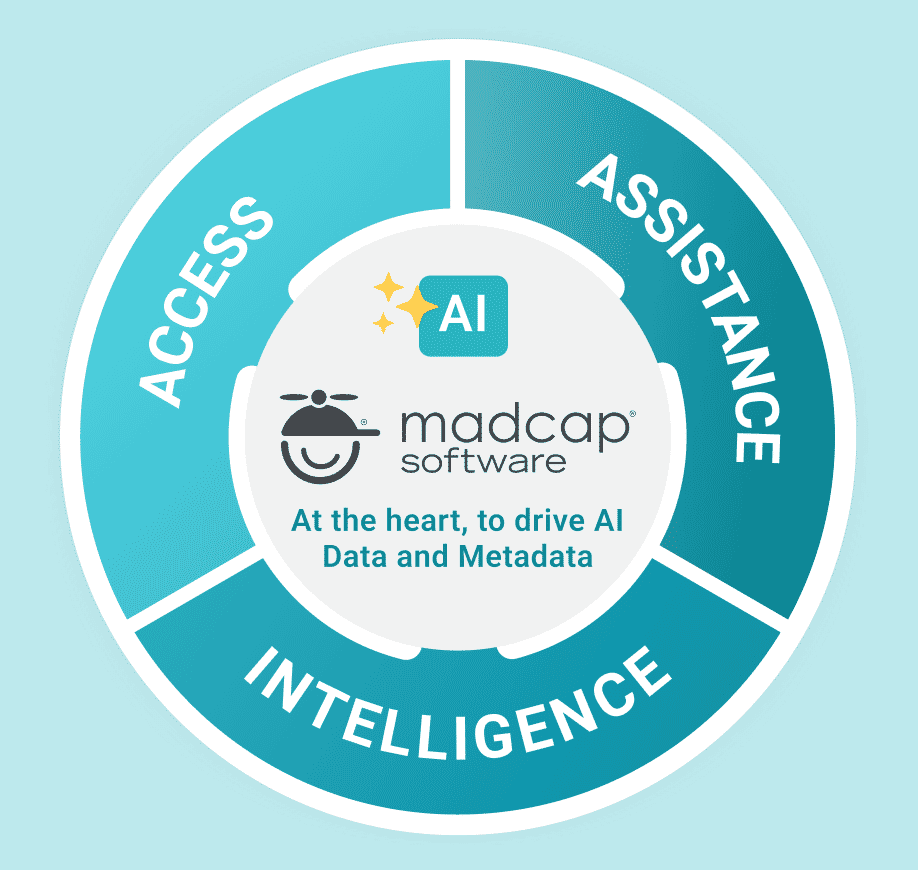
Part of why I care about this is what we’re building at MadCap. The acquisition of Xyleme brought together tools that, taken together, support the full arc of what a curator needs: structured authoring, content management, governed distribution. We think of that as the Knowledge Supply Chain: the infrastructure that turns organizational content into something an AI system, or a new hire, or a compliance auditor can actually rely on. L&D is not peripheral to that chain. In the organizations getting this right, it’s close to the center of it.