

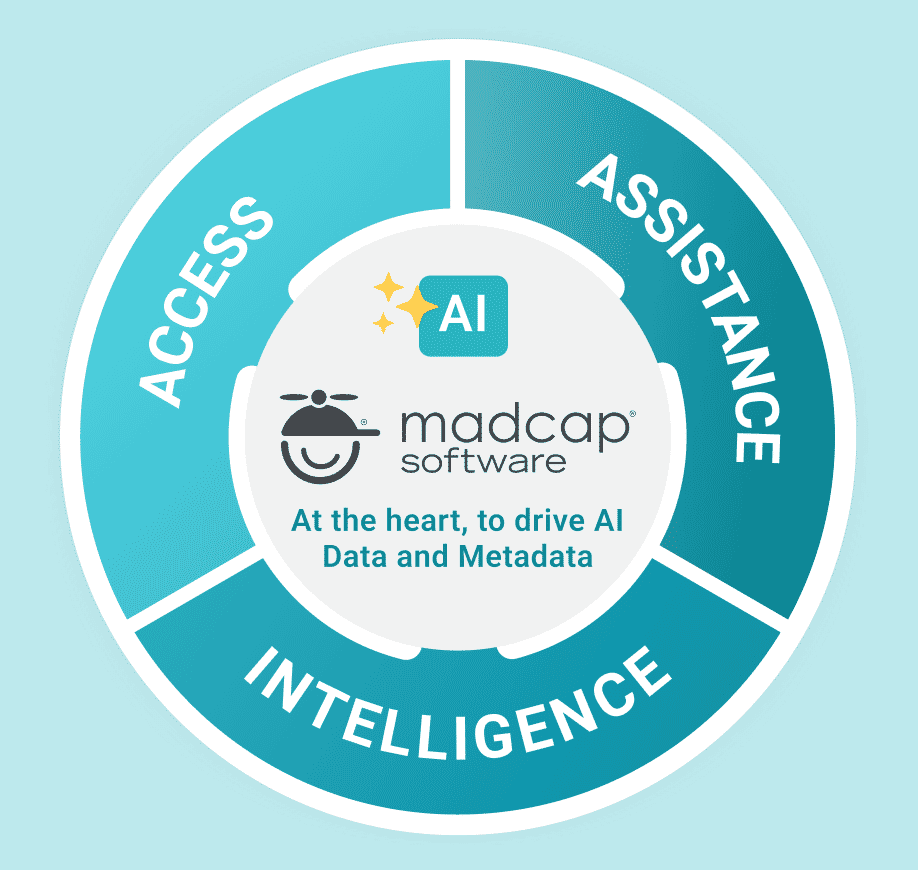




AI is no longer just a concept from science fiction. It has become a pivotal tool, reshaping our approach to creating and managing technical content.
AI is setting new standards in technical communications. It's not just changing how we work; it's revolutionizing the very nature of our work – making it more efficient, accurate, and user-centric.
From the days of manual drafting and editing, we've moved to an era where AI aids in automating and enhancing these processes. This shift isn't just about speed; it's about transforming the very fabric of how we handle technical information – making it more accessible, accurate, and aligned with the evolving digital landscape.
Artificial intelligence (AI) is not just a buzzword in the technical communication industry—it's another powerful tool to add to our already impressive arsenal. AI is reshaping the way technical content is created, managed, and delivered, offering a wealth of opportunities for organizations to streamline processes, enhance content quality, and optimize user engagement. In a webinar I presented to the Center for Innovation and Development, (CIDM) I walked through some of my thoughts on the multifaceted impact of AI on technical communication. I provided actionable insights and a glimpse into the future of this rapidly evolving field.
AI: The Collaborative Partner, Not the Replacement
A common misconception is that AI will render technical writers obsolete. However, the reality is far from it. AI is not a replacement for human writers but a powerful collaborator. It excels at automating repetitive tasks, analyzing vast datasets, and generating content at scale, freeing up technical writers to focus on higher-order activities that require human ingenuity, such as strategic planning, complex analysis, and creative problem-solving. This symbiotic relationship between AI and human writers creates a synergy that can enhance the overall effectiveness and efficiency of technical communications.
The integration of AI into technical communication workflows offers a wide array of benefits across the content lifecycle:
Content Generation
AI can assist technical writers in generating content for technical documentation. By leveraging AI language models like ChatGPT, technical writers can receive suggestions, proofreading, and refine their writing for clear and concise communication. AI can help in drafting emails, crafting reports, editing documents, and ensuring the accuracy and coherence of technical content.
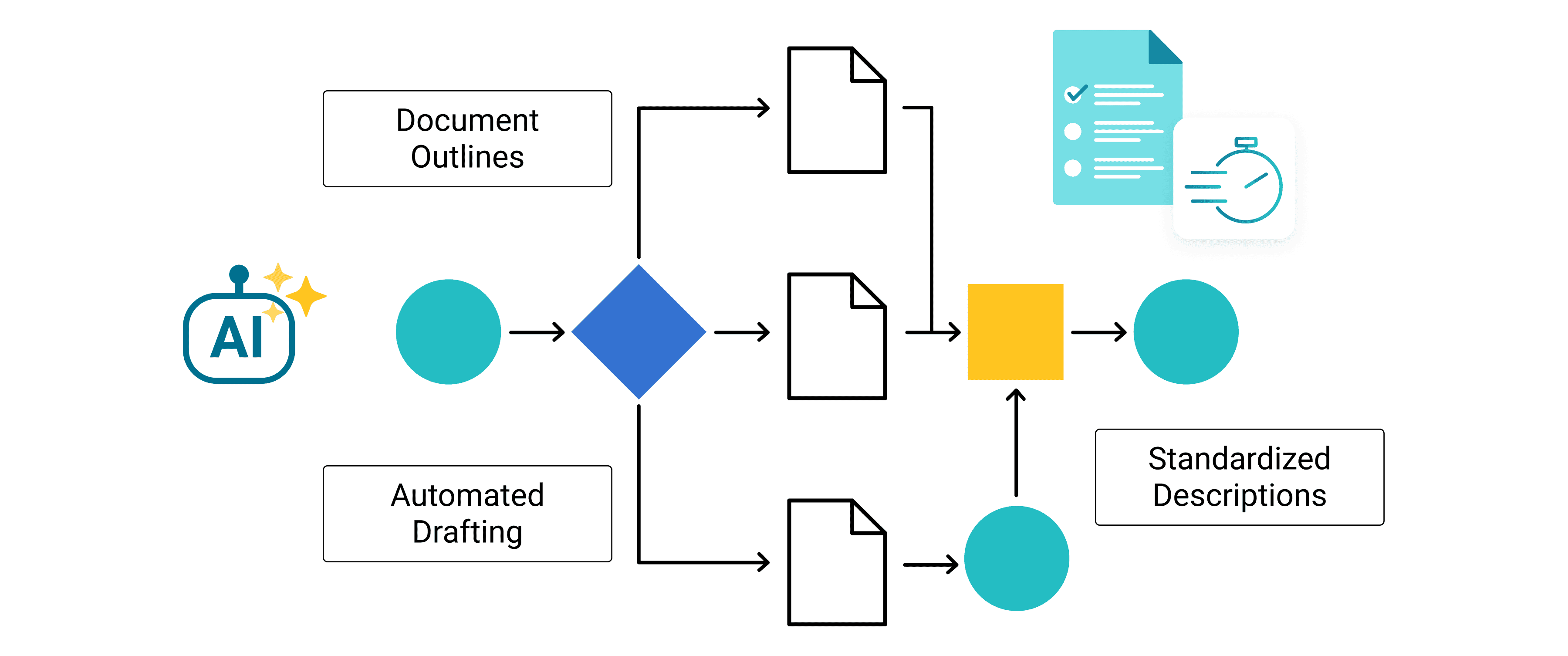
Automated Content Generation: AI algorithms can automatically generate foundational content for technical documents. This includes creating basic drafts, outlines, and even detailed sections of documents based on predefined templates and data inputs. This automation significantly speeds up the content creation process, allowing technical writers to focus on more complex, nuanced aspects of their work.
Document Outlines: AI can create structured outlines for documents, helping writers organize their thoughts and content more effectively. By analyzing the purpose and intended audience of a document, AI can suggest the most logical flow of information, ensuring that the final document is well-organized and coherent.
Standardized Short Descriptions: For products, services, or topics that require brief descriptions, AI can generate standardized snippets that provide concise, clear information. These are particularly useful for catalogues, product listings, and FAQ sections, where consistency and brevity are key.
Knowledge Retrieval
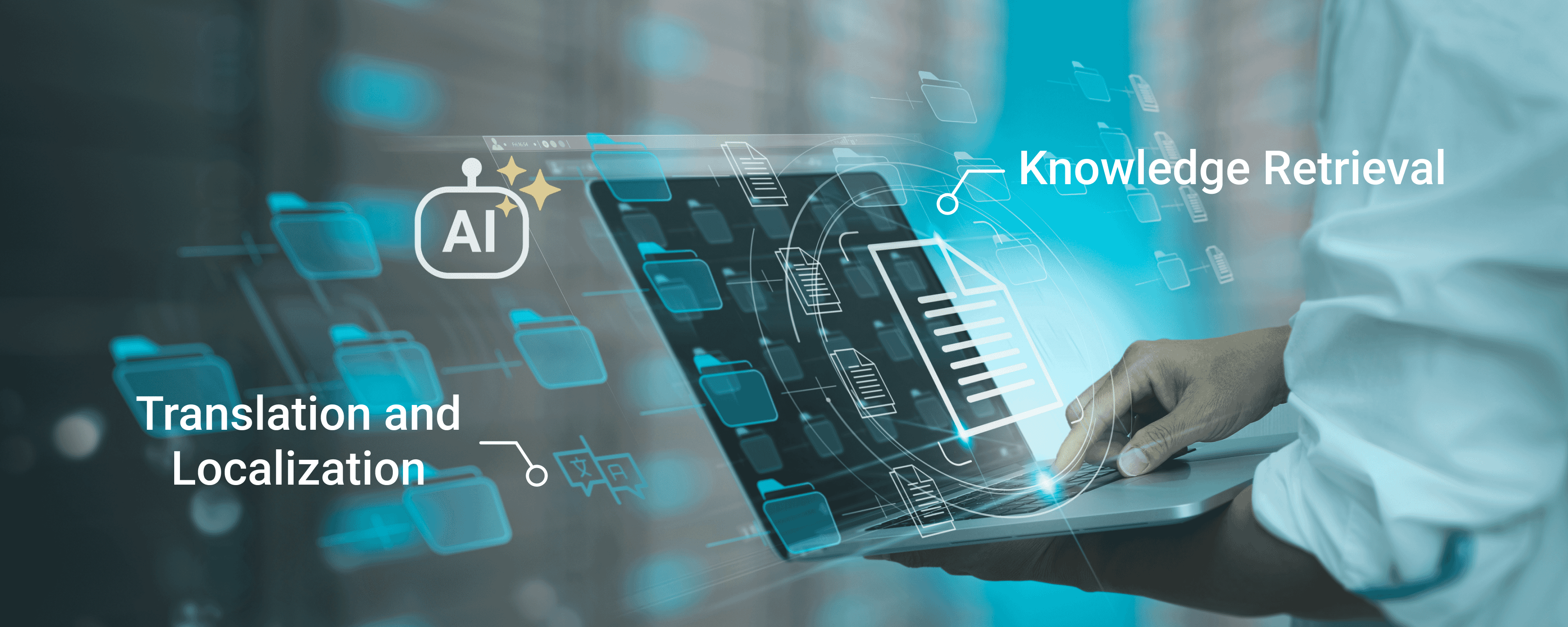
AI can be used to quickly retrieve information, definitions, or explanations related to technical topics. Technical writers can use AI-powered tools to search for relevant information, saving time and effort spent on searching for the right resources. AI can assist in gathering information on industry trends, competitor analysis, or specific technical concepts, enabling technical writers to stay up-to-date and provide accurate information in their documentation.
Translation and Localization
AI language models can aid in translation and localization of technical documentation. Technical writers can utilize AI-powered translation tools to translate their content into different languages, ensuring that their documentation is accessible to a global audience. AI can help in maintaining consistency and accuracy in translations, reducing the time and resources required for manual translation.
Content Organization and Management
AI can assist in organizing and managing technical documentation. Technical writers can use AI-powered tools to categorize and tag content, making it easier to search and retrieve specific information. AI can help in creating a standardized naming convention, organizing digital files or documents, and maintaining a structured and easily navigable documentation repository.
Structured Writing
Identifying and Typing Information: In DITA, content is organized into topics such as concept, task, or reference. AI can automatically categorize and type content into these DITA topics. By analyzing the content, AI can determine whether it is explaining a concept, guiding a task, or providing reference information, and accordingly classify it into the appropriate DITA topic type. This automation streamlines the process of organizing large volumes of content into manageable, structured, and purposeful units.
Enhancing Content Reusability: AI can identify potential reusable content elements, such as short descriptions, steps in a procedure, or definitions, and tag them for reuse across various documents. This not only saves time but also ensures consistency across different documents that share the same information.
Optimizing Metadata: Crucial for content management and retrieval, AI can enhance the process of tagging content with accurate and comprehensive metadata. By analyzing the content, AI can generate relevant keywords, summaries, and other metadata elements.
Automating Linking and Relationship Management: AI can automate the process of linking related topics, managing cross-references, and for organizations that have not yet invested in a Component Content Management System (CCMS), updating these links when changes occur. This ensures that the documentation remains interconnected and that users can easily navigate through related topics for a comprehensive understanding.
Facilitating Content Personalization (Profiling): DITA supports content personalization through conditional processing. AI can assist in identifying sections of content that can be conditionally delivered to different audiences. By analyzing user profiles or feedback, AI can suggest how to tag content for specific audience segments, ensuring that each user receives the most relevant and tailored information.
Quality Assurance and Editing
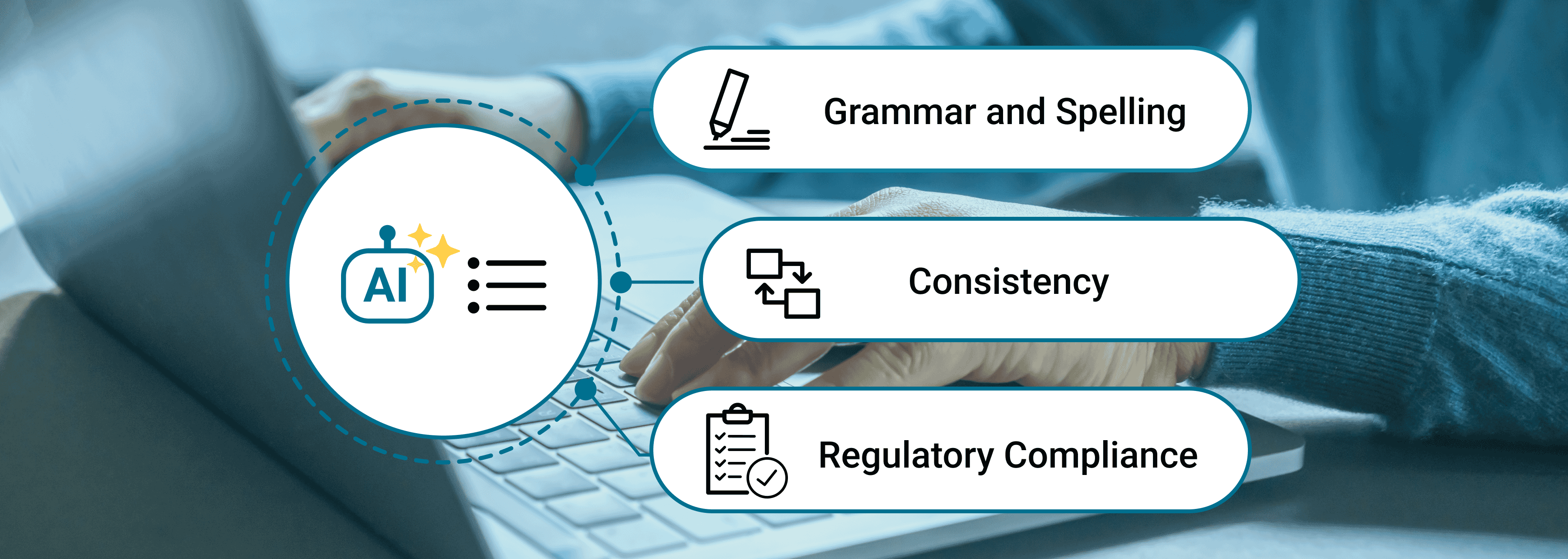
AI can be used for quality assurance and editing of technical documentation. Technical writers can leverage AI-powered tools to identify grammar and spelling errors, ensure consistent terminology usage, and improve the overall readability of their content. AI can provide suggestions for improving the flow and clarity of technical documentation, helping technical writers deliver high-quality and error-free content.
AI can play a significant role in maintaining the quality of DITA content. It can check for compliance with DITA standards, ensuring that the content adheres to the best practices of topic-based authoring. This includes validating the proper use of DITA elements and attributes, ensuring that the content structure aligns with DITA's architectural requirements.
Most of the time, a DTD or schema will ensure that the XML is valid, for the rules that have been set. However, the check is incomplete, as witnessed by the number of publication errors that are often regurgitated by the DITA Open Toolkit (DITA-OT) on publication. Some errors are missed out entirely and may result in broken links or missing topics as the publication engine refuses to or doesn’t know what to do with the source content. Without vigorous checks post publication some of these will go unnoticed, until pointed out by a customer, a regulatory body or other interested party.
Requirements Analysis: In the context of technical writing, AI can analyze project or product requirements to determine the scope and nature of the content needed. This analysis can help in planning the documentation process, ensuring that all necessary topics are covered and aligned with the project goals.
Enhancing Accuracy, Consistency, and Compliance: AI tools are particularly adept at maintaining a high level of accuracy and consistency across technical documents. They can ensure that the content adheres to specific style guides, technical terminologies, and formatting rules, providing a uniform look and feel to all documents. Additionally, AI can be programmed to comply with regulatory standards, ensuring that all generated content meets legal and industry-specific requirements.
Automation of Repetitive Tasks
AI can automate repetitive tasks in technical writing, freeing up time for technical writers to focus on more complex and creative aspects of their work. AI-powered tools can assist in tasks such as formatting, indexing, and generating tables of contents, reducing manual effort and increasing efficiency in technical writing processes.
Streamlining Content Conversion to DITA: For organizations transitioning to DITA, AI can facilitate the conversion of existing content into DITA-compliant formats. AI algorithms can analyze legacy content, identify the underlying structure, and map it to corresponding DITA elements, simplifying the migration process to a DITA-based content management system.

It's important to note that while AI can be a valuable tool for technical writers, it cannot replace human expertise and judgment. Technical writers should exercise critical thinking, review and validate AI-generated content, and ensure that the documentation meets the specific needs and requirements of the target audience.
Overall, by leveraging AI in technical documentation, technical writers can enhance their productivity, improve the quality of their content, streamline collaboration processes, and deliver accurate and accessible documentation to users.