Device Handbooks and Engineering Documents Built for Thousands of SKUs
Semiconductor and hardware companies face a unique challenge: enormous product portfolios with shared architectural foundations, but variant-specific specifications. MadCap IXIA CCMS’s DITA component architecture lets you author shared specifications once and assemble them into product-specific device handbooks, engineering documents, and ordering guides, eliminating inconsistencies from copy-paste workflows.

Semiconductor Leaders Trust MadCap IXIA CCMS for Product Documentation
2.3x
Writer Efficiency Gain
The Challenge: Engineering documents for OEM/ODM partners and consumer guides needed management across chipset families in 21 languages.
The Solution: Deployed MadCap IXIA CCMS with conditional processing across chipset variants and component-level reuse.
The Result: Writers produce 23 documents where they previously produced 10, with localization costs cut in half in year one and a 75% reduction overall.

2M
Pages Published
The Challenge: Product ordering guides, datasheets, and technical documentation across 75,000+ SKUs required a scalable approach.
The Solution: Adopted MadCap IXIA CCMS with Antenna House PDF and a content delivery platform for web publishing in 4 languages.
The Result: Nearly two million pages published with a 35–40% reduction in documentation production time.

130%
Content Reuse
The Challenge: FPGA device handbooks required 28 writers across 4 countries with translation into Japanese and Simplified Chinese.
The Solution: Deployed MadCap IXIA CCMS for device handbook authoring with component-level reuse and 7 translators.
The Result: 130% content reuse in device handbooks across globally distributed authoring teams.

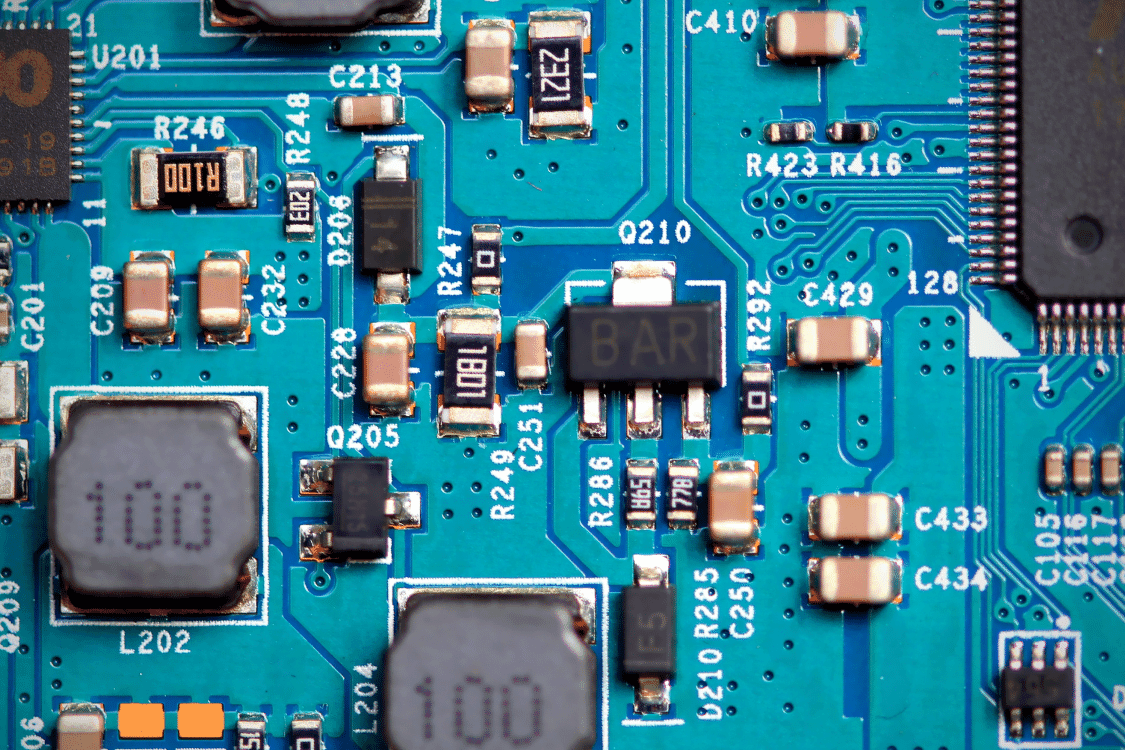
Semiconductor and hardware documentation covers the device handbooks, datasheets, ordering guides, and engineering reference documents that semiconductor companies provide to OEM/ODM customers, field applications engineers, and end users. These documents must stay synchronized across thousands of product variants, where shared silicon architecture meets SKU-specific pin configurations, operating conditions, and feature sets. MadCap IXIA CCMS’s DITA component architecture enables authors to create shared specification components once and assemble them into product-specific publications with conditional processing and key-based variable management, while TEXTML Server search and the Dependencies view keep large topic libraries manageable at enterprise scale.
Built for High-Volume Hardware Documentation

Variant-Specific Assembly
Author shared specifications once and assemble into product-specific handbooks using conditional processing and key-based variable management.

Component-Level Reuse
Reuse pin configurations, power characteristics, and feature descriptions across product families with the Dependencies view.

Multi-Format Output
Publish to PDF, HTML5, and WebHelp for online documentation from the same DITA source, with customizable output for additional formats.

Multilingual Publishing
Manage translations at the component level with IXIA CCMS's Unified Localization Model. AMD cut localization costs 50% in year one.

Integrated XML Editor
Author complex hardware specifications in oXygen Web Author with AI Positron Assistant for content quality improvements.

Enterprise-Scale Search
Find any topic across tens of thousands of components with full-text and metadata search powered by TEXTML Server.


MadCap IXIA CCMS Resources for Hardware Documentation
Videos & Tutorials
Watch demos and testimonials showing how semiconductor companies use MadCap IXIA CCMS for device handbooks and engineering documents.
Watch Videos
Success Stories
See how AMD, Analog Devices, and Altera manage product documentation at scale with MadCap IXIA CCMS.
View Success Stories
Product Overview
Explore the full MadCap IXIA CCMS feature set for DITA-based content management and variant documentation.
Learn MoreFrequently Asked Questions
IXIA CCMS’s DITA component architecture lets you author shared specification components once and assemble them into product-specific publications. Analog Devices manages 75,000+ SKUs, and AMD handles 16,000+ topics across chipset families.
IXIA CCMS publishes to PDF via Antenna House, HTML5 via Flare Online or MadCap SyndicateAI for web portals, and WebHelp for online documentation. Custom output formats can be built on top of these, and users can bring their own plug-ins to extend the publishing pipeline.
DITA conrefs and key references let you author a specification once and include it in multiple device handbooks. Altera achieves 130% content reuse in FPGA device handbooks.
Yes. IXIA CCMS manages translations at the component level with the Unified Localization Model. AMD cut costs 50% across 21 languages. Analog Devices publishes in four languages.
MadCap offers professional services for IXIA CCMS deployments, including content migration, DITA transformation, custom training, and implementation kickoff. A typical engagement runs in three phases: (1) discovery, map existing content, users, locales, and integration points; (2) structured rollout with custom training; (3) accountability check-ins through go-live. Sybase deployed to 50+ technical publications users across 6 countries in three months using this approach.
Scale Hardware Documentation with IXIA CCMS
Get a personalized demo and see how IXIA CCMS helps semiconductor and hardware companies manage documentation across thousands of SKUs with component-level reuse.