





What actually happens to content after it’s published? For most organizations, the answer is: it gets emailed as a PDF, buried three clicks deep in an intranet, or posted to a portal no one has updated recently. The content itself might be excellent. Well-structured, governed, built for reuse. But the moment it has to reach an actual person, the whole thing falls apart.
That’s not a content quality problem. It’s a delivery problem. And it’s where most knowledge strategies fail.
Delivery got left behind
For a long time, “published” meant done. You wrote the content, got it approved, pushed it out, and moved on. That model made sense when users had limited options and even lower expectations.
Now, people expect to find what they need quickly, in a context that feels relevant, through an interface that doesn’t require a tutorial to navigate. They expect content to behave more like a product. And most organizations are still delivering more like a filing cabinet of content.
Delivery was never treated as a discipline in its own right. It got treated as the last step in a publishing workflow. That’s the problem. MadCap Syndicate Portals was built to solve this.
More content maturity, more delivery complexity
Here’s what makes this harder than it looks: the more content maturity an organization builds, the worse the delivery problem gets.
Customers need documentation. Partners need product specs. Internal teams need training. Prospects need something else entirely. Each audience has different needs, different permissions, and a different reason for looking. So organizations do what feels logical: they create more portals, more sites, more copies of content tailored for each group.
Common challenges start to appear:
- One portal can’t serve every audience well
- Custom-built delivery experiences are expensive to maintain
- Static publishing creates duplication and outdated content
- Search works differently across systems, if at all
- Branding and UX are inconsistent across touchpoints
And suddenly, the system you built to scale is generating exactly the sprawl you were trying to avoid. Version drift. Outdated content. No single source of truth. Search that works differently in every portal, or doesn’t work at all.
The delivery infrastructure becomes the bottleneck. That’s a hard thing to fix after the fact.
What a better model actually looks like
The shift content-forward organizations are making is straightforward to describe, even if it’s not always easy to execute: governed content in one place, delivered through multiple purpose-built experiences.
The old model treats a portal like a website with documents attached to it. Static exports. Manual publishing. UX that hasn’t evolved since the CMS it was bound to. Some organizations try to solve this with custom-built delivery sites on top of their content APIs, which works, until it doesn’t. Custom builds need engineering to maintain. They drift out of sync. They become technical debt faster than anyone anticipates.
Syndicate Portals are built around a different idea. A portal isn’t a website. It’s an application. It pulls content dynamically from a governed source, so there's no publishing step, no version drift, and no manual syncing. Fix something at the source, and every portal that draws from it reflects the change. Immediately.
Modern Synicate Portals are different.
- Designed around discovery, not navigation
- Powered by live content and metadata
- Leveraging the power of Syndicate’s semantic AI
- Aggregate multiple documents into a single experience
- Capable of supporting public, private, or mixed access
- Built to evolve without rebuilding everything underneath
- Top-to-bottom control of the user experience
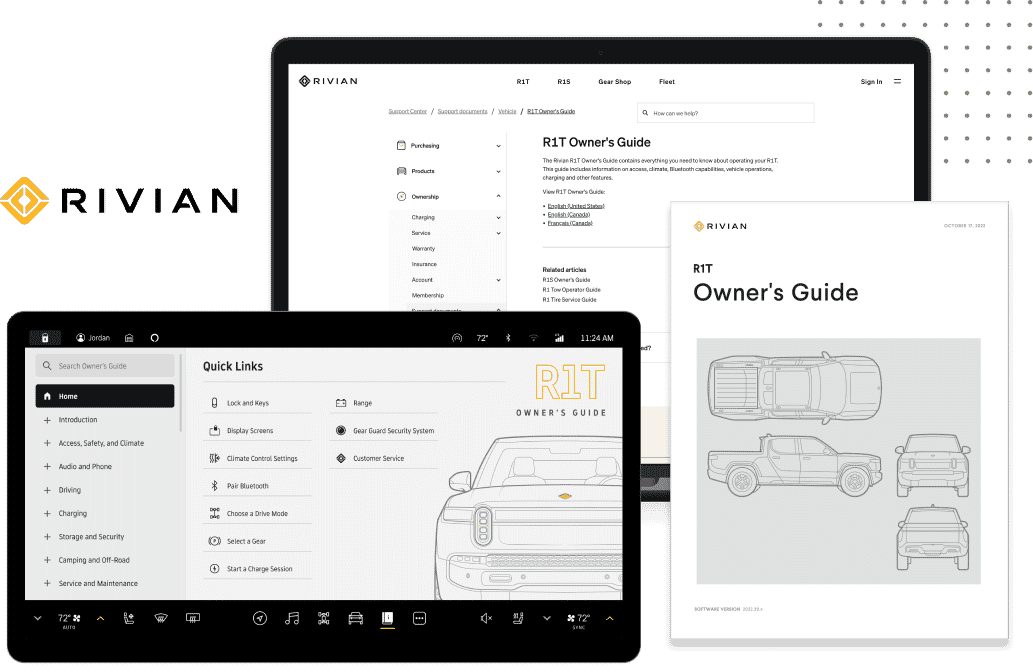
One content foundation can support public documentation, authenticated partner portals, and mixed-access scenarios simultaneously, each with its own experience and access rules. Syndicate Portals control which documents appear, how navigation is structured, and how the whole thing looks, without writing code. Front-end teams who want deeper customization can build fully custom sites on top of Syndicate’s APIs.
The portals are fully white-labeled. Users don’t see the platform. They see a branded, coherent site that feels like it was built specifically for them. Because in every meaningful way, it was.
When delivery is treated as a product, content becomes more usable—and more valuable. One governed content system. Twenty different audience experiences. All current, all branded, all appropriate for the people using them. That’s what scalable delivery actually looks like.
Built for the teams doing the work
Technical Documentation teams
Structured content is only valuable when people can find it and use it. Syndicate Portals give technical documentation teams a way to extend what they’ve already built, without adding overhead. That means:
- Documentation delivered as a living experience, not a static output
- Intelligent discovery that surfaces the right content, not just a long list of results
- Curated, role-specific views for customers, internal teams, or both
- Governance and control are maintained throughout, regardless of how many portals you’re running
Public portals can also be indexed by search engines and AI crawlers, which means documentation becomes a genuine acquisition and support asset, not just a destination for customers who already know where to look.
Easier to find. Easier to use. Easier to scale. Without adding maintenance overhead.
Learning & Development teams
L&D teams are often caught between two options: rigid learning platforms that don’t flex, or custom builds that require ongoing engineering support. Syndicate Portals offer a third path. Teams can:
- Deliver learning through branded experiences that actually reflect the organization
- Combine training content with supporting resources in one coherent destination
- Support internal, partner, and customer learning from the same content foundation
- Adapt delivery as programs evolve, without rebuilding from scratch
The idea isn’t to force content into a fixed learning experience. It’s to let learning adapt to how people actually learn.
Why AI makes this urgent
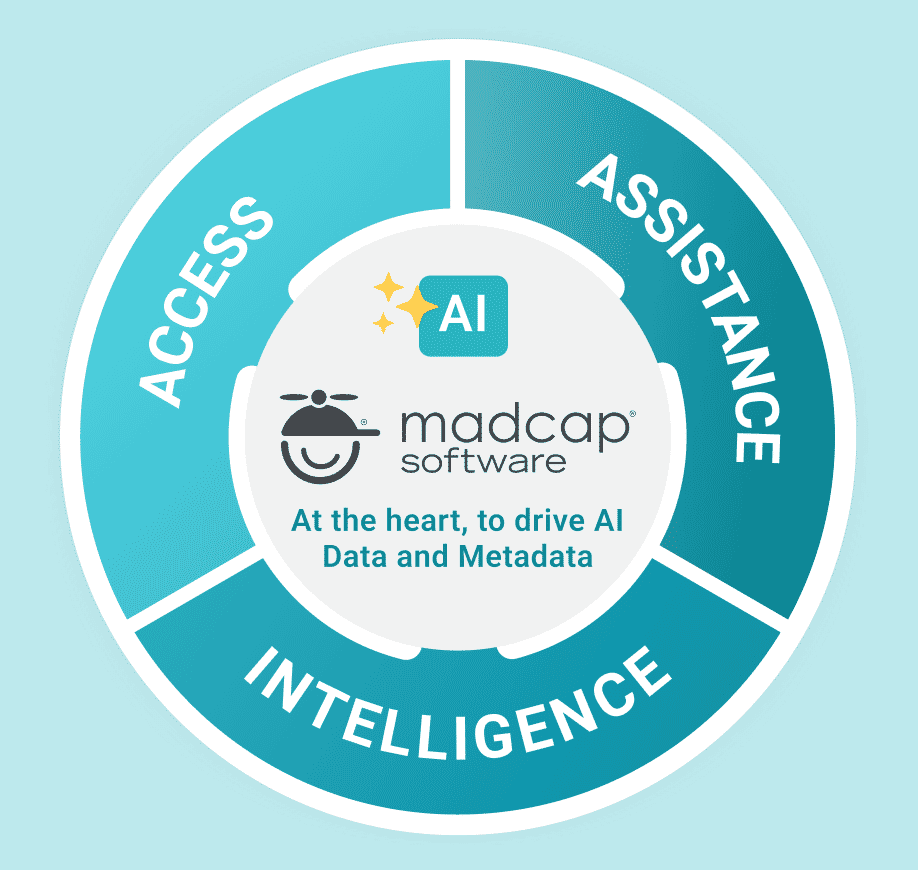
Organizations are investing in AI-powered search, knowledge assistants, and content-driven agents. And they’re learning quickly that AI is only as good as the content experience it’s operating on. Feed it inconsistent, outdated, siloed content, and you get inconsistent, outdated, siloed answers. The quality of your content infrastructure shows up directly in the quality of your AI outputs.
Governed content needs an equally intelligent delivery layer. One that makes content discoverable, contextual, and trustworthy at the moment someone needs it. Without that layer, even the strongest content infrastructure stalls before it ever reaches the people it was built for.
Syndicate Portals are that layer. Not better authoring. Not more structure. Better delivery, treated as a part of the strategy from the start.
Stop managing destinations. Start delivering experiences.
Your organization is already creating valuable content. Documentation, training, enablement, knowledge assets. What’s missing is the delivery layer that gets it in front of the right people, in the right context, without requiring teams to rebuild for every audience.
Syndicate Portals closes the delivery gap. Branded, intelligent, always current, and built to scale alongside your content strategy, not behind it.
Ready to see what this looks like in practice?
See how to deliver governed content at scale, across multiple audiences in our on-demand webinar. Watch it here: Unleash AI-Ready Knowledge at Scale.
Frequently Asked Questions
What is a content delivery portal and how is it different from a knowledge base?
A knowledge base is where content lives. A content delivery portal is how it reaches people. Most knowledge bases are built for storage and governance. They're not designed with the end user's experience in mind. A portal like MadCap Syndicate Portals sits on top of your governed content and delivers it as a branded, searchable, audience-specific experience. The content stays in one place. The delivery adapts to whoever's looking.
How do you deliver content to multiple audiences without duplicating it?
The key is separating content from presentation. With MadCap Syndicate Portals, one governed content foundation can power multiple portals simultaneously, each with its own branding, navigation, access rules, and audience focus — without copying or maintaining separate versions of the content itself. A customer-facing documentation portal and an internal training portal can draw from the same source and stay in sync automatically.
How does content delivery affect AI performance?
AI tools, like search assistants, knowledge agents, and chabots, are only as reliable as the content they're built on. If the underlying content is inconsistent, siloed, or outdated, the AI outputs will be too. A governed, well-delivered content layer gives AI systems accurate, current, trustworthy material to work with. It also makes content discoverable by AI crawlers, which matters for organizations building AI-ready knowledge strategies
Should we build a custom documentation portal or use a purpose-built solution?
Building solutions means using software developers to create something custom, but there can be challenges and hidden costs. Hosting, managing, and security take time and resources, and it requires specialized skills to maintain and connect to different content sources. Purpose-built solutions like Syndicate Portals give you the same flexibility without the engineering dependency. Teams control the experience without code, and front-end teams can still build on the APIs if they want deeper customization.