





Advancements in technology are driving many changes in the way we deliver learning. The integration of talent intelligence, skills intelligence, and content intelligence is revolutionizing the learning industry. In this blog, we will discuss how these advancements will drive many changes and how there will be a greater focus on modern learning across all modalities.
Integration of Talent Intelligence, Skills Intelligence, and Content Intelligence
The integration of talent intelligence, skills intelligence, and content intelligence is a major advancement that will revolutionize the way we assign work. These new technologies will enable businesses to better match the skills required with the skills available to improve job performance and business outcomes. By integrating talent, skills, and content intelligence, organizations can create individualized learning experiences that drive growth for both the learner and the enterprise.
Talent Intelligence
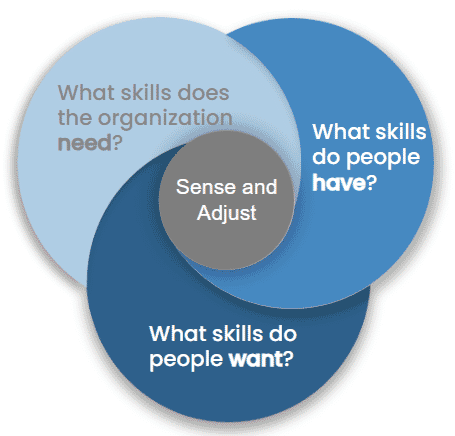
Talent Intelligence is the application of data to recruit, retain, reskill, and reorganize work. These insights are used to identify the strengths and weaknesses of their workforce and improve workforce planning to ensure they have the talent in the right places to meet their business objectives.
Using job opening, recruiting, hiring, and promotion data, companies can sense and predict:
- Strengths of your entire talent pool to identify underlying skills gaps
- Someone getting ready for a career shift or looking for a new role
- Candidate matching for open positions
Talent Intelligence Platforms assist with:
- Classifying and measuring the current talent pool against skills required to drive business plan
- Monitoring time to fill open positions, candidate source (internal/external), and the skills posted versus skills of selected candidate
- Tracking employee mobility & retention
- Managing costs of talent acquisition
Skills Intelligence
Skills Intelligence involves building and managing skills ontologies, cataloging who has which skills, and defining skill requirements for roles. These insights allow organizations to identify the skills that are most important for success in different roles and positions, allowing us to upskill individuals in real-time with shifts in market demands.
Using this data, organizations can:
- Build and maintain skills ontologies to drive performance and growth.
- Sense changes in skill requirements for top performance in a role and use data to adjust job descriptions and hiring criteria
- Make connections with adjacent skills to expand the candidate pool for open positions.
- Skills Intelligence Platforms assist with:
- Creating & maintaining skills ontologies
- Filling roles, sourcing work, and staffing projects based on skills, adjacent skills, and skill potential
- Building individualized career journeys based on targeted skill gaps
Content Intelligence
Content Intelligence makes your content smarter. It allows organizations to identify the learning content that is most effective for different learners based on their skills, competencies, and learning styles, driving success in their current role and preparing them for their next role.
Using this data, organizations can:
- Analyze content library against forecasted skills requirements to prioritize content development projects
- Merge content utilization data with operational metrics to identify the most effective learning interventions
- Enable the creation of individualized learning plans
- Content Intelligence is typically included as part of a Component Content Management System (CCMS) and assists with:
- Cataloging and classifying content against skills ontology
- Tracking content utilization across all delivery methods to paint a more complete picture of the learning journey
- Allowing content to act like code – stored in JSON & XML, tagged with metadata, and can be manipulated by scripts to support more dynamic and individualized learning journeys.
Win-win-win. People want orchestrated experiences designed to make them successful and advance their careers. When we can help people develop the skills in high demand by the business, we give them the comfort of knowing they have marketable skills, which gives them security to support their families. (win) Aligning skills development with the high-priority skills the business needs ensures we have staff ready to take on key roles and facilitates internal mobility, which drives employee engagement and retention. (win) Creating a system where the skills needed and the pathway to build these skills are transparent levels the playing field, providing everyone with a path to advancement. (win)
Greater Focus on Modern Learning Across All Modalities
In today’s fast-paced world, learning has become an essential part of our lives. With the advent of technology, learning has become more accessible and engaging. Modern learning is an approach that focuses on learner engagement, flexibility, and personalization.
This approach is becoming increasingly popular as learners demand more engaging and interactive learning experiences.
The Benefits of Diversifying Learning Methods
Supporting more modalities can provide numerous benefits for both organizations and employees. Here are just a few:
- Flexibility: By offering a variety of training methods, employees can choose the best approach for them. Some may prefer the structure of ILT, while others may prefer the convenience of eLearning or the just-in-time support of performance support.
- Engagement: Different modalities can keep employees engaged and interested in the learning process. For example, eLearning can incorporate gamification and interactive elements to make the experience more enjoyable.
- Efficiency: Performance support can provide just-in-time learning, allowing employees to find the information they need to complete a task quickly. This can save time and increase productivity.
Supporting More Delivery Systems
In addition to diversifying learning methods, organizations should also consider supporting more delivery systems. Learning management systems (LMS) have been the go-to platform for managing and delivering training content. However, there are other options available, including:
- Learning Experience Platforms (LXP): These platforms focus on personalized and social learning experiences. They often incorporate AI and machine learning to recommend content based on an employee’s interests and learning history.
- Adaptive Learning: This approach uses data and analytics to personalize learning experiences based on an employee’s strengths and weaknesses. It can help employees learn more efficiently and effectively.
- Knowledge Management: This system focuses on capturing and sharing knowledge within an organization. It can be a valuable tool for onboarding new employees and ensuring that knowledge is not lost when employees leave.
Supporting more modalities and delivery systems can benefit organizations and employees. By diversifying learning methods and platforms, organizations can provide a more engaging and effective learning experience. This can increase productivity, employee satisfaction, and, ultimately, a more successful organization.
There are more learning technology choices than ever before! Organizations that can build cohesive, connected, personalized learning journeys that take advantage of specialized tools will increase learner engagement and improve learning outcomes.
Design with 70-20-10 and the OSF Ratio
The 70-20-10 and the OSF Ratio is a powerful tool for aligning learning experiences with the skills and competencies required for different roles and positions.
Many organizations still need help to deliver personalized training because true personalization requires learning experiences to seamlessly cross modalities and platforms. As learners move from one platform to another, they should have a cohesive experience that builds on their existing knowledge and skills.
This level of personalization requires learning professionals to break down silos between content teams, including ILT, eLearning, and Knowledge Management, and embrace new delivery platforms that provide specialized needs, such as LMS, LXP, Adaptive Learning, and Knowledge Management. These platforms must work together to provide a seamless learning experience that meets the needs of learners across different roles and positions.
If learners are going to move across modalities and systems, we need to standardize our content to be consistent. This means using consistent language, formatting, and design elements across all platforms and content types. Doing so can create a unified learning experience that reinforces key concepts and helps learners build their skills and competencies over time.
Alignment with the OSF and consistency across platforms is essential for creating effective learning experiences. By working together and embracing new delivery platforms, we can ensure that learners receive the most relevant and up-to-date information and build the skills and competencies they need to succeed in their roles.
Conclusion
Advancements in technology are driving many changes in the way we deliver learning. The integration of talent intelligence, skills intelligence, and content intelligence is revolutionizing the learning industry. We can expect to see a greater focus on modern learning across all modalities and more consistency across platforms to ensure a cohesive experience for learners. It is important for learning professionals to stay up to date with the latest trends and technologies to ensure that they are delivering the best possible learning experiences.
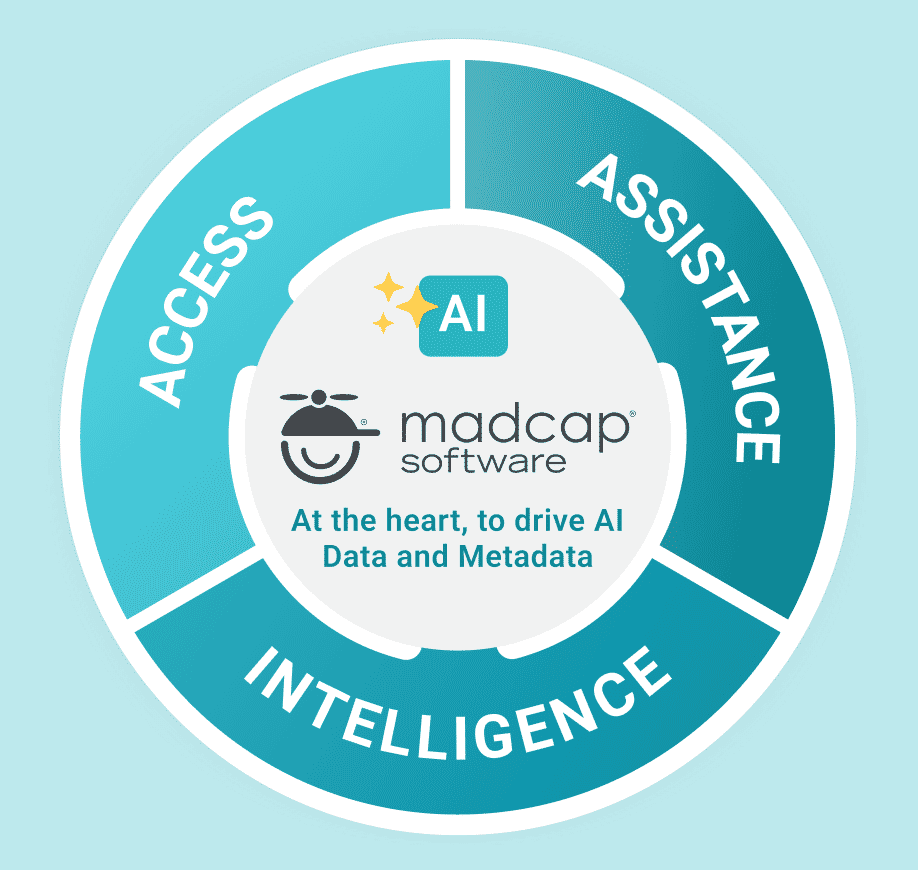
To further enhance these learning experiences, MadCap Software’s LCMS is equipped with an ecosystem of products that play a pivotal role. By offering a comprehensive suite of tools including content collaboration software, content authoring software, and content delivery software, MadCap Software ensures that organizations can effectively manage, collaborate on, create, and analyze educational content. This ecosystem supports a seamless workflow, empowering organizations to streamline content development and distribution, thereby enhancing learning outcomes and operational efficiency.