





Frequent releases and evolving tools make it tough for software teams to stay aligned. Training content often falls behind and becomes disconnected. This blog shows how a dynamic, centralized learning ecosystem can help teams onboard faster, reduce rework, and scale learning with development—and how MadCap Syndicate makes it possible.
From sprint cycles and security updates to continuous integration and shifting tech stacks, software companies operate in an environment where change is constant and release velocity matters. Development moves quickly, and teams are expected to keep up.
The problem is that training systems haven’t evolved at the same pace. Content is scattered across SharePoint folders and outdated PDFs. Updates lag behind product releases. Internal tools, workflows, and developer knowledge often live in silos.
When teams can’t find the right information or trust that it’s up to date, they default to workarounds, rework, or pinging teammates for help. That slows delivery, creates inconsistency, and makes it hard to onboard, support, or scale teams efficiently.
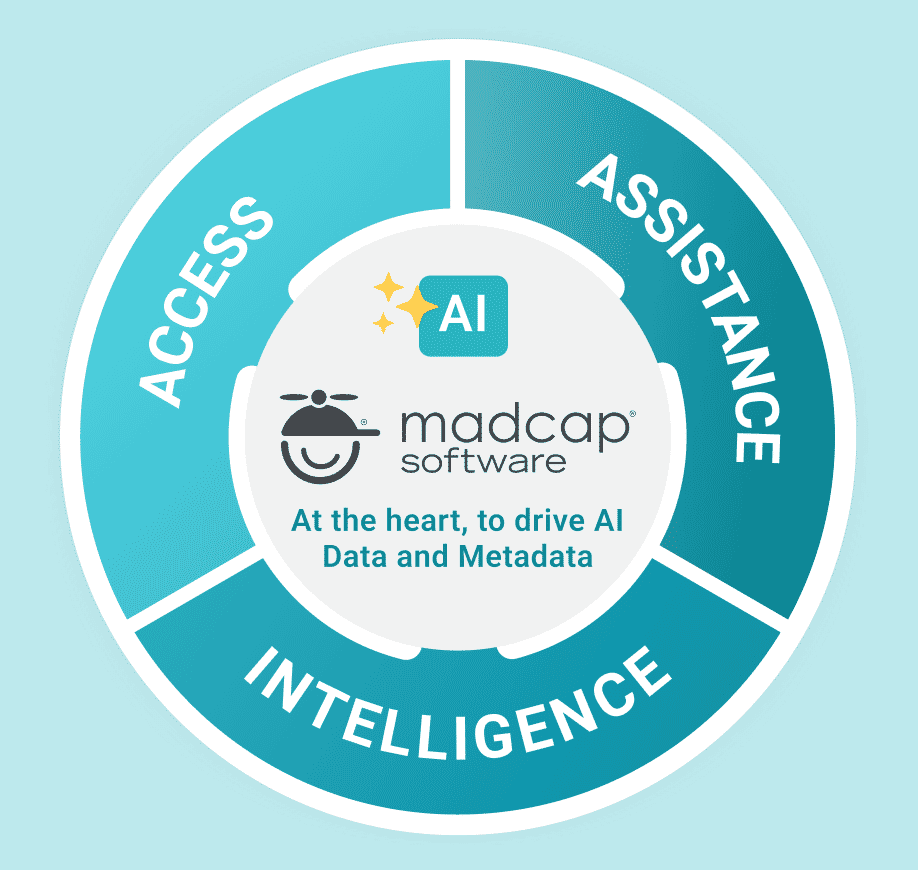
Keeping up with modern software development means having more than fast code pushes. It requires a learning infrastructure that evolves alongside your tech stack. One that scales across teams, supports continuous delivery, and works with intelligent tools like AI. But AI can only perform reliably when it’s built on clean, structured content like engineering standards, API documentation, and internal processes.
That’s where a dynamic learning ecosystem comes in.
What Is a Dynamic Learning Ecosystem?
A dynamic learning ecosystem is a modular framework made up of four core components:
- Centralized content management
- Metadata-driven organization
- AI integration designed for proprietary content
- Personalized learner experiences aligned to workflows
Together, these layers support learning systems that evolve with the product, reduce time to knowledge, and prepare teams for what’s next.
1. Centralized content that scales with the product
Software companies create and update a massive amount of content: API documentation, release notes, onboarding materials, internal playbooks, security protocols, and more. When this content is spread across tools or managed manually, it becomes hard to maintain and even harder to trust.
MadCap Syndicate offers a single, structured source of truth. Teams can update content once and distribute it instantly across delivery platforms. There’s no need to reauthor the same material multiple times. Content remains consistent and accurate for every team.
If an API changes or a new security guideline is released, the content update flows across Learning Management Systems (LMSs), internal knowledge bases, chatbots, and developer portals. This content agility is essential in an environment where iteration is constant and accuracy matters.
2. AI that understands your documentation and workflows
AI has incredible potential to streamline developer support and automate learning. But out-of-the-box tools fall short when they aren’t connected to your proprietary content, such as engineering standards, security protocols, or custom workflows.
That’s why companies are turning to Retrieval-Augmented Generation (RAG). With RAG, AI tools can securely access your internal documents in real time to deliver relevant, up-to-date support.
MadCap Syndicate is designed to enable this securely. It structures content for machine readability so AI tools can generate contextual responses based on your documentation rather than public internet data.
Imagine a developer troubleshooting an integration. Instead of pinging a teammate or guessing through outdated materials, they ask an AI assistant and get an accurate answer drawn directly from your updated documentation.
But that only works if the content behind the AI is structured, maintained, and accessible. Without that foundation, automation becomes unreliable and inconsistent.
3. Metadata that makes learning relevant and actionable
Metadata gives your content context. By tagging content with details like job role, product line, release cycle, or learning objective, companies can make learning content discoverable, personalized, and measurable.
A developer completing a course on secure coding might be automatically served follow-up content on vulnerability testing or API hardening. A new hire on the QA team can be matched to role-specific onboarding based on tools, team, or domain.
MadCap Syndicate makes it easy to apply metadata at scale. The result is more precise content delivery, better learner engagement, and stronger reporting. It also powers analytics that help teams track engagement trends and identify gaps in the knowledge base.
This visibility turns content into a strategic asset that supports learning, compliance, and performance at every level.
4. Learning experiences that evolve with your release cycles
Training cannot be static, especially in fast-paced development environments. With a dynamic learning ecosystem, companies can orchestrate experiences that adapt to each learner’s context and behavior.
Developers might receive refresher content before a major release. Engineers struggling with a concept can be offered additional practice automatically. Chatbots can deliver just-in-time guidance based on recent updates or product changes.
MadCap Syndicate supports delivery across any learning platform, LMS, portal, or internal system while keeping the underlying content consistent and AI-ready.
Why This Matters Now
The World Economic Forum estimates that nearly 60 percent of employees will need reskilling by 2030. For software companies, that future is already here. AI is transforming how teams build, test, and support digital products. New frameworks, tools, and practices emerge constantly. Developers and product teams cannot rely on training content that is outdated or disconnected.
AI can help, but it depends on having a solid content foundation. Structured content, metadata, and centralized delivery are what make AI tools reliable and scalable.
Make Your Content the Advantage
Software moves fast. Learning has to move faster. By centralizing content, applying metadata, and enabling AI to work with your proprietary materials, you can create a learning ecosystem that supports faster onboarding, smarter automation, and scalable growth.
Teams using MadCap Syndicate are already seeing the difference through more efficient learning systems, better knowledge retention, and less content maintenance.
Ready to learn more?
Get the white paper to see how software companies are future-proofing learning with dynamic ecosystems built for AI.