






We all played with them as kids… maybe we still do as adults.
Those famous building blocks we know and love spark our creativity and provide limitless opportunities for reinvention.

From a cityscape to an alien ship to a cozy cottage, the same pile of blocks can become literally anything — they are the perfect example of reuse.
The same concept can be applied to content, if we think about it a little bit differently.
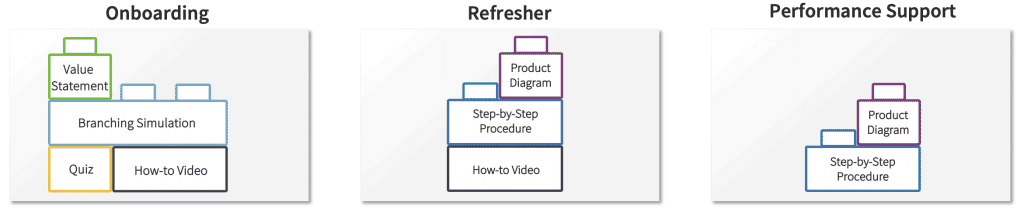
What if, instead, we created content in flexible, reusable chunks that we could essentially use as independent building blocks? Building blocks that could be used as stand-alone objects or assembled, personalized, and localized in an infinite number of ways based on the unique needs of each individual audience.
Flexible Content is Reusable Content

What if, instead, we created content in flexible, reusable chunks that we could essentially use as independent building blocks? Building blocks that could be used as stand-alone objects or assembled, personalized, and localized in an infinite number of ways based on the unique needs of each individual audience.
What if we could tailor those building blocks based on language, topic, audience, etc., into any number of outputs without duplicating efforts? If we started from independent, reusable building blocks from a centralized content library, we could easily reuse existing content and augment where needed instead of starting from scratch with each new deliverable.
Treat Content as a Business Asset
Traditional tools lock content into set formats, making it difficult to reuse without a lot of manual effort. One the reasons The Building Block Method is so effective, is because it hinges on separating content from presentation layer — the content is created independently and the formatting is applied later as each deliverable is published.
Time and again, we have found that content authors typically spend more than half of their time on formatting, styling and layout. By creating reusable content blocks independent of formatting, organizations can quickly pivot and create or redeploy content in new deliverables to respond to changes or serve additional audiences.
Why It's Time to Challenge the Status Quo
Relying on traditional processes and “rapid” authoring tools is no longer an efficient or effective way to manage large volumes of content. Creating each deliverable from scratch, trapping content into restrictive formats, and allowing content to reside in multiple incompatible tools or platforms all make it more difficult to create and manage content effectively — let alone pivot and respond to new needs and challenges.
It’s simply not sustainable at scale — your content strategy is holding your back.
By adopting a flexible content strategy based on building independent, reusable content blocks, storing them in a central location, and separating content from presentation — what we call The Building Block Method — organizations can quickly respond to unforeseen changes, reuse existing content with new context and deploy new content iteratively at the point of need, in any number of formats.
Bringing Reuse & Flexibility to Enterprise Content Management
Organizations must be willing to challenge the status quo and reexamine their existing content strategy, processes and tools to stay ahead of the curve.
Shifting to a flexible approach designed for reuse and scalability is possible with the right foundation. That doesn’t mean throwing away the tools you have in place. Instead, integrate them into your content management technology ecosystem and figure out where you need to fill in the gaps. The more complex and diverse your content, the more you need to look at it from an enterprise level.
I would estimate that we have cut content development time by 66%, simply by being able to easily reuse what’s already been created in MadCap Create and Syndicate.
Allina Health
If content volume, maintenance and scale are not beyond the reasonable ability of an individual or team to manage, a simpler tool set is probably enough. If, however, an organization employs a more complex content management strategy — which can cause content deliverables to increase exponentially when multiple products, audiences, roles and languages come into play — a more robust configuration of tools and platforms is likely going to be required.
Platforms like MadCap Software’s award-winning Component Content Management System (CCMS) support the entire content creation and management lifecycle, from authoring and publishing to delivery, reuse and analysis, allowing organizations with complex content needs and audiences to create and deploy content efficiently and to pivot and respond quickly when needed.
Got Content Problems?
At MadCap Software, we specialize in partnering with our customers to solve the complex content problems other solutions don't have the depth or breadth to tackle.
If your content management challenges feel overwhelming, we can help.