





The Learning and Development (L&D) landscape has undergone a massive transformation in recent years. No longer centered around traditional compliance training and skill development, L&D now plays a critical role in driving organizational success, especially in the face of rapid market changes and increasing talent scarcity. According to a recent study by the World Economic Forum, nearly half of all employees will need reskilling by 2025. For businesses, this is both a challenge and an opportunity that can be addressed by creating a dynamic learning ecosystem.
But what does a dynamic learning ecosystem look like in the age of artificial intelligence (AI)? How can organizations build a learning environment that meets today’s needs and is adaptable enough to grow with tomorrow’s challenges? This blog will explore how businesses can leverage AI to create a modular, flexible, and robust learning ecosystem that transforms L&D from a cost center into a measurable value and ROI driver.
Why a Dynamic Learning Ecosystem Matters
In today’s fast-paced world, agility is everything. Businesses need to be able to react quickly to changes, and that means having an equally nimble workforce. To keep employees up-to-date on the latest skills, mindsets, and behaviors, organizations must manage learning content that evolves as rapidly as the market does.
This is where a dynamic learning ecosystem comes into play. AI is at the core of this ecosystem, enabling seamless management, personalization, and delivery of learning content. An AI-powered ecosystem doesn’t rely on a one-size-fits-all solution. Instead, it’s built from modular layers of capability that can be combined, reconfigured, and scaled based on an organization’s unique needs.
By integrating tools like MadCap Software’s Syndicate, organizations can take content distribution to the next level by automating the deployment of learning materials across platforms. Automated distribution eliminates the manual effort required to keep content updated across multiple systems, such as Learning Management Systems (LMS), Learning Experience Platforms (LXP), and custom web applications.

The Four Pillars of a Dynamic Learning Ecosystem
To build a truly dynamic learning ecosystem, organizations must focus on four key capability layers. Each layer is powerful, but when combined, they create an adaptable system that can evolve as the business grows.
1. AI Strategy for Proprietary Learning Content
The first step to building a dynamic learning ecosystem is to develop a strategy for incorporating AI into your proprietary learning content. Artificial intelligence has the potential to transform every aspect of L&D, from content creation and personalization to performance tracking and predictive analytics.
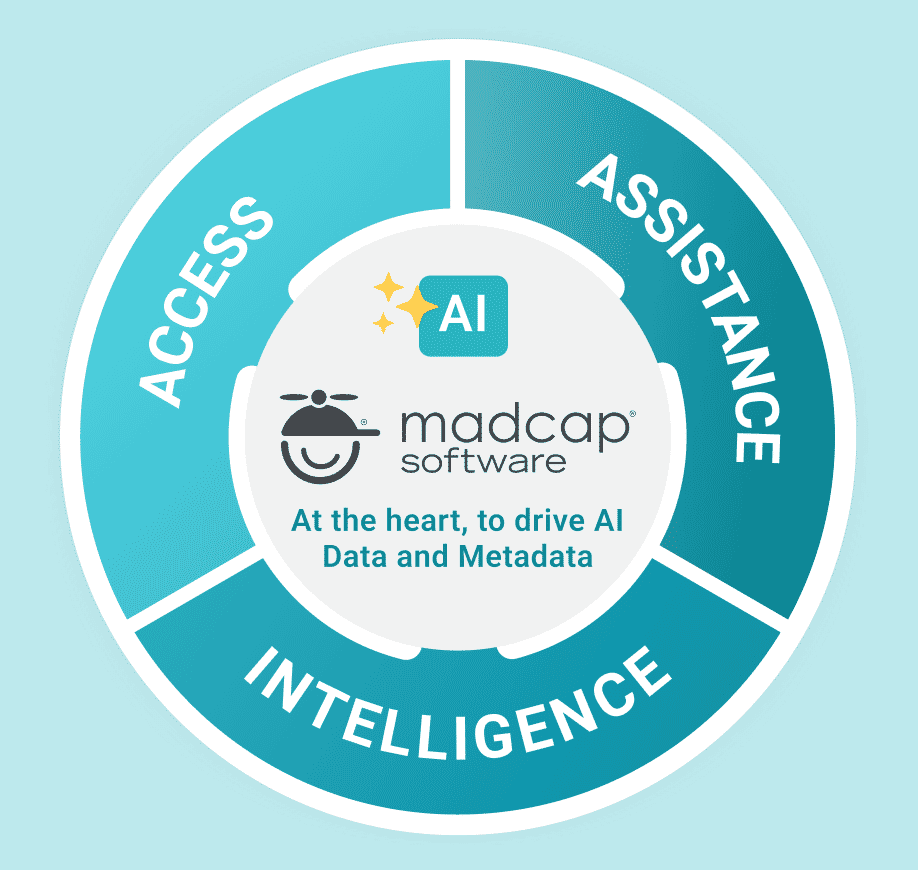
AI is only as good as the data it works with, but the good news is that most organizations’ content creation teams are sitting on a gold mine of data. For AI to function effectively within an ecosystem, proprietary content must be well-structured, tagged, and ready for AI analysis. Platforms like MadCap Software are designed to ensure that learning materials are clean, accurate, and up-to-date. When integrated with AI, these systems can recommend personalized learning paths, predict future skill needs, and automatically update content to reflect the latest information—ensuring that employees are always equipped with relevant, timely learning.
2. Centralized Content Management Solutions
A robust content management system (CMS) forms the backbone of any dynamic learning ecosystem. In today’s digital-first world, learning content is no longer limited to static modules or traditional textbooks. Instead, businesses must manage a wide variety of content formats—videos, articles, case studies, interactive simulations, and more—across multiple platforms.
A centralized LCMS like MadCap Software allows organizations to manage, track, and update content across their entire learning ecosystem. This centralized approach ensures that AI tools, learners, and administrators all have access to the most up-to-date information, eliminating confusion and inefficiency while enabling rapid content updates. As businesses adapt to market changes, this flexibility is critical for keeping employees aligned with evolving business needs.
3. Metadata Strategy for Dynamic Content Discovery
Metadata may not be the most glamorous topic in L&D, but it’s the secret ingredient that turns content into a dynamic, discoverable asset. Metadata—essentially data about data—allows AI systems to search, categorize, and recommend content in ways that are highly personalized to each learner’s needs.
For example, well-tagged content can help AI algorithms match a learner’s previous experience, career goals, and performance data to specific training materials. Metadata also enables adaptive learning paths, ensuring learners are presented with the right content at the right time. MadCap Software makes structuring and tagging content easy, enabling organizations to tap into AI’s full potential. Without metadata, even the most sophisticated AI system will struggle to deliver effective learning experiences, as it won’t be able to locate or categorize the right content.
4. Orchestrated Learner Experiences Across Platforms
The final pillar of a dynamic learning ecosystem is the learner experience itself. While content management and AI may operate behind the scenes, the learner experience is what your employees will engage with every day. An orchestrated learner experience means creating seamless, personalized learning journeys that span multiple platforms and touchpoints—from Learning Management Systems (LMS) and Learning Experience Platforms (LXP) to mobile apps and social learning environments.
By centralizing content in a robust Learning Content Management System (LCMS) and leveraging AI to power personalized learning paths, organizations can ensure each learner receives the content they need when and where they need it. This improves learner engagement and retention while driving better business outcomes by aligning learning with organizational goals.

The Power of Modularity
One of the most significant advantages of a dynamic learning ecosystem is its modularity. Rather than relying on a single monolithic solution, businesses can mix and match different tools, platforms, and capabilities to create a learning environment that is tailored to their specific needs. Platforms like MadCap Software are designed with modularity in mind, allowing organizations to scale and adapt their learning ecosystems without the need for major overhauls or disruptive transitions.
For example, while one department may need a robust AI-driven content recommendation system, another might require a more focused tool for managing assessments or performance tracking. With a flexible platform, businesses can build a learning ecosystem that evolves alongside them, ensuring they are always prepared for the next challenge.
Building for the Future
The future of L&D is dynamic, AI-powered, and modular. As businesses face increasing pressure to reskill their workforce and keep pace with constant change, a flexible learning ecosystem is no longer a luxury—it’s a necessity. By focusing on the four key capability layers—AI strategy, content management, metadata, and learner experience—organizations can create an adaptable, scalable, and future-proof learning environment.
Now is the time to start building your dynamic learning ecosystem. With the right strategies and tools in place, you can meet today’s learning challenges and prepare your organization for whatever the future holds. By incorporating these elements, the blog emphasizes the critical role automation, metadata, and modularity play in shaping a dynamic, AI-powered learning ecosystem.
Ready to dive in further? Check out our whitepaper, Building a Dynamic Learning Ecosystem to Support Your AI Strategy for L&D.